
Fix the root cause of No-Call No-Show with help from TeamSense
Table of Contents
- What shift coverage planning means in manufacturing
- Types of shift schedules in manufacturing
- Why coverage gaps break down on the shop floor
- Inputs you must gather before you build a coverage plan
- Step-by-step: Create a manufacturing staffing plan that supports coverage
- Effective use of technology in shift scheduling
- Day-of-shift coverage management (what supervisors do when reality changes)
- Compliance and safety guardrails for manufacturing shift coverage
- KPIs to prove your shift coverage plan is working
- Implementation checklist (30-60-90 day rollout)
Shift coverage problems rarely come from one big mistake. They show up as small gaps that stack up across stations, skills, and hours until a line is limping, supervisors are scrambling, and overtime becomes the default fix.
In today’s manufacturing operations, especially for organizations with multiple plants, shift coverage planning is increasingly complex. Coordinating coverage across locations presents significant obstacles that require strategic solutions.
A solid coverage plan turns staffing into an operating system. It connects production requirements to station level skills, real availability, and a clear escalation path so the work gets done safely and predictably. Effective workforce planning and data-driven decision-making are essential for optimizing shift coverage and achieving operational efficiency.
Advanced technology platforms have revolutionized how manufacturing organizations manage shift coverage, and those who master these multi-plant challenges gain significant competitive advantages through improved operational efficiency and workforce utilization.
What shift coverage planning means in manufacturing
Shift coverage planning is the discipline of ensuring every required role on every line is staffed for every hour of the operating schedule. It is not only about “having enough people,” it is about having the right qualifications in the right places at the right times. Tracking employee attendance, skills and certifications is crucial to ensure that each shift includes the necessary qualifications to support the manufacturing process.
In practical terms, coverage planning lives at the station level. It accounts for the operators, support roles, and relief coverage needed to keep flow moving through the shift, even when conditions change. Skills-based scheduling, supported by a database of employee certifications and skills, helps ensure that work schedules and production schedules are aligned with the needs of the manufacturing process.
Coverage is different from a schedule because a schedule is an output, not a guarantee. A posted schedule can still fail coverage if the scheduled people are not qualified for the stations that matter most, or if they are pulled away mid shift.
Coverage is also different from headcount planning. A plant can be “fully staffed” on paper and still miss coverage due to skill gaps, call outs, break coverage holes, or competing priorities like quality investigations and maintenance support. Manufacturing shift scheduling is essential for aligning staffing with production demands to meet production requirements efficiently.
Absences are a predictable reality, which means they should be designed into the plan rather than treated as an exception, and using an absence rate percentage calculator can help quantify the true impact on coverage. In 2025, the U.S. manufacturing absence rate reported by BLS was 2.9%, which is a useful external benchmark for why coverage buffers matter.
BLS also notes that its 2025 annual absence estimates are 11 month averages that exclude October 2025 due to a federal government shutdown, and that the 2025 estimates are not strictly comparable to earlier years.
Shift coverage planning vs. a staffing plan in manufacturing
A manufacturing staffing plan is the forward-looking blueprint. It defines planned headcount by role and skill, the shift pattern you intend to run, and the hiring and training needed to meet future demand. Staffing plans should also account for future staffing needs by utilizing demand-based scheduling and effective workforce planning, ensuring that workforce requirements are aligned with operational demands.
A shift coverage plan is the execution method. It is the day to day and week to week approach for assigning specific people to specific stations so the line is truly covered, not just scheduled.
These two plans operate on different time horizons. Long-range planning typically looks across the quarter or year, mid-range planning looks at the month or week, and short-range planning focuses on the next day or the next shift.
Managing shift coverage across multiple manufacturing plants requires strategic planning and advanced tools.
The Costly Impact of Absenteeism on Manufacturing Operations
Learn how chronic, unplanned absenteeism is a costly impediment to manufacturing productivity and efficiency, and how you can reduce absenteeism.
Types of shift schedules in manufacturing
Manufacturing shift schedules come in several forms, each tailored to meet the unique production demands and workforce needs of manufacturing plants. The most common types include fixed shifts, rotating shifts, and split shifts.
- Fixed shifts assign employees to the same work hours each week, providing predictability and stability for both the business and its workforce. This approach can boost employee satisfaction by supporting work-life balance and making it easier for employees to plan outside commitments. Fixed shifts are often used in manufacturing companies where production demands are steady, and coverage gaps are less likely to occur.
- Rotating shifts require employees to cycle through different shift times, such as mornings, afternoons, and night shifts, on a set pattern. This type of manufacturing shift schedule is especially valuable for plants that operate multiple shifts or run continuous operations. Rotating shift patterns helps distribute less desirable shifts more fairly, reducing employee burnout and improving morale. They also ensure that no single group of employees is always assigned to night shifts or weekends, which can help with employee retention and engagement.
- Split shifts divide the workday into two or more segments, separated by extended breaks. This schedule is often used during peak production periods or when specific technical skills are needed at different times of the day. Split shifts can help manufacturing businesses align labor resources with fluctuating production demands, ensuring adequate staffing when and where it’s needed most.
Effective shift scheduling goes beyond simply filling slots on a calendar. Scheduling managers must consider employee preferences, skill sets, and availability to minimize coverage gaps and control labor costs. By aligning shift assignments with both operational requirements and employee expectations, manufacturing companies can improve employee satisfaction, maintain compliance with predictive scheduling laws, and enhance overall operational efficiency.
Why coverage gaps break down on the shop floor
Coverage breaks when variability exceeds a system designed as if every day were average. In manufacturing, demand swings, schedule changes, and product mix shifts can quickly invalidate yesterday’s assumptions about where labor is needed. Staffing gaps and unexpected absences can disrupt coverage, making it essential to maintain coverage through proactive strategies such as cross-training, contingency planning, and clear policies, plus broader strategies to reduce absenteeism in the workplace so gaps are less frequent in the first place.
Absences and turnover add more volatility, especially when only a few people hold critical qualifications. Skill constraints and certification requirements can make the gap feel bigger than the headcount suggests, because not every available person is deployable, and the operational risk of unpredictable attendance in manufacturing is often underestimated until it shows up as missed orders or safety issues. Maintaining an up-to-date on-call list or "flex pool" of part-time or temporary staff is valuable for last-minute coverage and helps address sudden staffing gaps.
Equipment constraints, takt time pressures, and labor standards also shape what “enough coverage” means. A station that is barely stable on day shift can become a bottleneck on nights if the skill mix changes. Controlling labor costs and improving scheduling efficiency are key to balancing shift coverage and overtime, ensuring operational continuity while minimizing unnecessary expenses.
Overtime can patch holes in the short term, but it introduces fatigue and risk. OSHA summarizes evidence that accident and injury rates are 18% greater on evening shifts and 30% greater on night shifts compared to day shifts, which is relevant context when coverage strategy depends on late hours.
Balancing shift coverage and overtime is a significant challenge for many employers in manufacturing plants, but doing so effectively can improve productivity, reduce labor costs, and enhance employee morale and satisfaction, especially when you understand the impact of absenteeism on manufacturing productivity and design staffing plans accordingly.
The hidden cost of “just run overtime” and controlling labor costs
Overtime can keep a line running, but it often does so by shifting the burden onto a smaller and smaller group of people. That creates fatigue accumulation, increases the chance of mistakes, and can damage morale when the same employees get tapped repeatedly. Excessive overtime costs can significantly impact the business and may result in compliance violations if not managed properly.
It also adds compliance and payroll complexity. In the U.S., overtime pay is required for hours worked over 40 in a workweek for covered, non-exempt employees, at not less than time and a half the regular rate. Employers must also ensure adherence to minimum wage and overtime regulations to avoid legal penalties and fines.
Just as important, hours cannot be averaged across multiple weeks to avoid overtime, because overtime is determined by the workweek.
Employers who violate overtime regulations may face penalties and fines, making compliance a critical consideration in scheduling. Compliance with labor laws is essential when balancing shift coverage and overtime in manufacturing plants.
Inputs you must gather before you build a coverage plan
A coverage plan only works when it is grounded in clear inputs and shared assumptions. Before you assign anyone to anything, get alignment on what must be covered, when it must be covered, and what “qualified” means at each station.
Start with production requirements. Capture the operating calendar, including shifts per day, days per week, and planned shutdowns, then layer in line rate or takt expectations, plus known changeovers and maintenance windows. Align staffing levels with production demand to minimize downtime and labor expenses, ensuring that labor expenses are managed efficiently as part of overall business costs.
Next, define the work design for each line. Build a role list that reflects reality, including stations, material handling, setup, quality checks, and any specialized coverage like forklifts or inventory moves, and design it with manufacturing flexibility in mind so roles and stations can adapt to changing product mix.
Then document workforce constraints. That includes headcount by role and shift, known restrictions like certifications or medical limits, and planned PTO and training schedules that will affect availability. To create a versatile workforce capable of filling multiple roles, utilize cross-training among employees. If absence reporting is inconsistent, fix that input first; automating attendance to reduce no call no show incidents and using tools such as TeamSense to capture call-outs in a repeatable way means supervisors are not piecing together coverage status from voicemails and texts.
Finally, establish governance. Decide who owns the plan across Operations, HR, and Production Control, and define an escalation path for when coverage breaks so supervisors are not improvising under pressure; strong shift management practices turn this into repeatable standard work instead of ad hoc decision-making.
Because absences are part of normal operations, capture your absence patterns and design a buffer strategy instead of hoping for perfect attendance; reviewing workplace absenteeism trends and patterns can highlight when and why gaps are most likely.

Build (or update) a skills matrix that matches stations, not job titles
A skills matrix turns headcount into coverage capable headcount. It shows who can run each station safely and independently, not just who shares the same job title. Existing systems, such as HR management or time and attendance platforms, can be leveraged to maintain a database of employee certifications and skills, enabling effective skills-based scheduling.
Structure the matrix so rows are employees and columns are stations or roles. Use clear proficiency levels such as trainee, qualified, and trainer, and define what each level means in your plant.
Include a recency requirement so qualifications stay real. Recency is the idea that someone may be “trained” but not currently sharp if they have not performed the work recently, so the matrix should reflect current readiness.
Set a simple coverage rule for critical stations. Every critical station should have at least one qualified person scheduled, plus a defined back up who can step in if the plan breaks.
Use the matrix to guide cross training in a targeted way. Focus training time on the stations that repeatedly constrain coverage, rather than spreading training evenly across low impact roles.
Step-by-step: Create a manufacturing staffing plan that supports coverage
- Step 1 is to list the minimum required roles per line per shift. This is your base coverage, and it should reflect how the line actually runs when it is stable. Effective employee scheduling is essential here to ensure production schedules are met and to anticipate future staffing needs.
- Step 2 is to add the non negotiable roles that protect flow. That includes relief and break coverage, changeover and setup support, quality checks, and material movement roles that prevent starvation and blocking.
- Step 3 is to choose a coverage buffer approach. Common options include floaters or utility operators, an on call list, and staggered start times that create overlap where the risk is highest.
- Step 4 is to translate skill gaps into hiring and training pipeline needs. If you cannot staff a critical station on nights without pulling from days, that is a planning signal, not a supervisor problem.
- Step 5 is to document assumptions and set a review cadence. When the schedule changes, when turnover spikes, or when a new product is introduced, the staffing plan should be updated before the floor feels the pain. Publishing schedules at least 2-4 weeks in advance can reduce unplanned absences by up to 25%.
If you need a simple benchmark for how common overtime is in the sector, FRED’s manufacturing overtime series can provide context. Average weekly overtime hours for production and nonsupervisory employees in manufacturing were 3.8 hours in January 2026, seasonally adjusted.
Continuous improvement is key to effective shift coverage planning in manufacturing, and it sits alongside broader manufacturing flexibility initiatives that help plants respond to changing demand without relying solely on overtime. Collecting feedback from employees about scheduling helps identify common issues and refine processes, supporting ongoing enhancements to your staffing plan.
Coverage math you can implement in a spreadsheet (no advanced formulas required)
A spreadsheet based coverage plan works when it is built on a few core tables that stay consistent. The first is a coverage requirements table by line, shift, and role, which defines what must be staffed.
The second is the skills matrix table, which defines who is qualified for what. The third is an availability table, which captures planned PTO, training, and any other known unavailability.
The fourth is the assignment table, which is the actual plan for who goes where. Keep it simple enough that a supervisor can read it fast during a busy handoff.
Add validation checks that force the right conversations. Confirm every required role is filled, confirm the match is skill qualified, confirm no one is double booked, and flag potential overtime exposure. Integrating time and attendance systems directly into shift planning can help verify worked hours versus planned hours and improve scheduling efficiency. If you have frequent last-minute changes, platforms like TeamSense can help teams keep the “availability table” current by making call-outs and updates visible quickly, but the spreadsheet logic still needs to be sound.
When you flag overtime, use a rule that aligns with wage and hour requirements and pair it with broader overtime management strategies in manufacturing so costs, fatigue, and compliance stay under control. For covered, non exempt employees, overtime is based on hours worked over 40 in a workweek, not on an averaged period.
Scheduling systems with built-in compliance features can also help ensure adherence to local labor laws and regulations while supporting attendance management practices that address excessive absenteeism in the workplace before it becomes a chronic coverage problem.
Effective use of technology in shift scheduling
Leveraging technology is essential for modern manufacturing plants aiming to optimize their shift scheduling and workforce management. Advanced workforce management software enables scheduling managers to create, adjust, and communicate shift schedules with greater accuracy and speed, reducing the risk of errors and last-minute coverage gaps.
These platforms allow for real-time tracking of employee availability, skills, and preferences, making it easier to assign the right people to the right shifts. Automated scheduling processes can generate shift templates, flag potential scheduling conflicts, and help control labor costs by monitoring overtime and ensuring compliance with labor regulations. This not only streamlines the scheduling process but also helps prevent unplanned overtime and reduces administrative burden.
Technology also plays a critical role in improving communication across manufacturing companies, especially those with multiple locations. Centralized oversight ensures that scheduling updates, shift swaps, and emergency coverage needs are communicated quickly and consistently, keeping everyone aligned and minimizing disruptions. With built-in analytics and reporting, workforce management systems provide valuable insights into scheduling trends, employee engagement, and operational efficiency, empowering managers to make data-driven decisions and continuously improve their processes.
By adopting effective technology solutions, manufacturing businesses gain a strategic advantage in managing shift coverage, maintaining compliance with local and state laws, and supporting employee morale. Ultimately, the right technology helps ensure that manufacturing shift schedules are both efficient and responsive to the needs of the business and its workforce, leading to improved employee satisfaction and stronger operational performance.
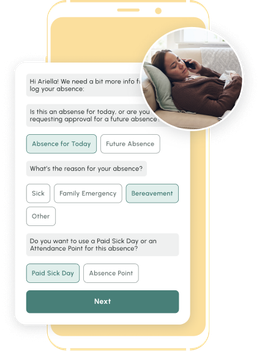
No one wants to talk to their boss or a 1-800 stranger to call off. Text changes everything - Reducing No Call No Shows.
Day-of-shift coverage management (what supervisors do when reality changes)
Even the best plan will be tested by call outs, late arrivals, and unexpected downtime work. Day of shift coverage management is the standard work that keeps the response consistent, fast, and fair, and it should include clear expectations and tactics for handling employees who always show up late. Digital platforms that enable self-service shift swapping can help supervisors quickly address unexpected absences and maintain coverage, increasing employee flexibility and job satisfaction.
Use a clear escalation ladder that supervisors follow in order. Reassign within the line using the skills matrix, pull from the floater pool, move work between lines or products if feasible, and approve overtime only when the other options cannot protect the plan. Some teams use solutions like TeamSense to reduce delay in the first step (finding out who is actually out and why) and to enforce consistent employee call-in procedures for unplanned absences, so the escalation ladder can start earlier instead of mid-shift.
Run short coverage huddles at the start of the shift and at key transition points. Confirm critical stations first, confirm break coverage next, and confirm changeover and setup coverage before the line hits those windows.
Document what happened so tomorrow’s plan improves. Track reason codes such as absence, rework support, or downtime support, and capture the impact in plain language so trends can be addressed, including consistent documentation for no call no show write-ups when employees miss shifts without notice.
Unexpected absences are one of the most common disruption drivers, which is why day of shift response should be designed, not improvised, and why plants benefit from structured strategies to reduce absenteeism in manufacturing alongside solid coverage processes.
Designing a floater (utility) role that actually protects throughput
Floaters work when they have a defined purpose tied to constraints. A utility role should cover known constraint stations, provide break relief, absorb material handling surges, and protect training time when the floor is short. To ensure adequate shift coverage planning in manufacturing, it is important to have more workers available, especially during peak periods or emergencies. Maintaining an up-to-date on-call list or "flex pool" of part-time or temporary staff helps provide last-minute coverage and prevents productivity losses.
The role fails when it becomes “extra hands” without priorities. If floaters are routinely locked into permanent assignments, the plant loses its shock absorber, and supervisors are back to scrambling.
Set clear deployment rules that prioritize the critical path. When multiple problems happen at once, assign floaters to protect the constraint first, then protect break coverage, then support non-critical tasks.
Make the floater role part of the skills strategy. It is one of the fastest ways to build flexibility, because floaters can be trained across multiple stations and used to maintain skill recency.
Compliance and safety guardrails for manufacturing shift coverage
Coverage decisions should be bounded by guardrails that reduce legal exposure and predictable safety risk. Guardrails keep the plant from solving today’s staffing issue by creating tomorrow’s incident or payroll problem. In addition to legal requirements, it is essential to comply with collective bargaining agreements, which can vary across multiple manufacturing plants and significantly impact scheduling practices.
Fatigue and shiftwork risk should be treated as operational risk, not personal weakness. OSHA summarizes evidence that working 12 hours per day is associated with a 37% increased risk of injury, which makes extended shifts a planning signal that deserves added controls.
OSHA also notes in its guidance that there is not a specific OSHA standard covering extended or unusual work shifts.
Document the decisions that matter. Capture overtime approvals, rest period practices in a consistent way, and training on fatigue awareness so expectations are clear and repeatable. It is important to document rest periods and ensure they are incorporated into work schedules to avoid compliance violations related to labor regulations. When policy updates or open-shift needs change late, tools such as TeamSense can be a practical way to communicate with hourly employees who aren’t on email and broadcast updates to hourly teams who are not consistently on email, but the guardrails still need to be defined in writing and enforced consistently.
Scheduling systems with built-in compliance features can help ensure adherence to local labor laws and regulations, helping to prevent compliance violations and avoid legal penalties.
When to treat overtime as a symptom, not a solution
Overtime is a symptom when it is required to hit the baseline schedule, not just to handle a one time spike. If the same shift is repeatedly short, or the same constrained stations are always uncovered, the staffing plan is likely structurally out of date.
A cross training backlog that never closes is another warning sign. It often means the plant is spending all its labor on output today, leaving no capacity to build flexibility for tomorrow.
When these triggers show up, change the system before pushing harder. Update staffing assumptions, increase cross training tied to coverage gaps, add floaters or adjust the shift pattern, and rebalance product mix or scheduling where possible. Continuous improvement in staffing plans is essential—regularly review processes, gather stakeholder feedback, and monitor fatigue indicators such as safety incident reports during late-night or extended shifts to ensure ongoing optimization.
KPIs to prove your shift coverage plan is working
Coverage KPIs should measure whether the plan is doing its primary job. Track the percent of shifts fully covered to plan, the number of critical station gaps, and how long it takes to fill gaps after call-outs. Shift planning and scheduling efficiency are often reflected in these KPIs, as they indicate how well workforce coverage is optimized and how effectively the scheduling process supports operational goals.
Labor KPIs should show whether the plant is paying for coverage with instability. Track overtime hours, schedule stability, and training or certification progress against the plan. Fair and equitable shift assignments are also crucial, as they support employee retention and morale by avoiding resentment and promoting a positive work environment.
Safety and quality signals should be reviewed by shift and by trend. Watch near misses and incidents over time, and look for scrap or rework spikes that correlate with coverage gaps or skill mismatches.
If you want KPIs to drive action (not just reporting), make sure the “why” behind gaps is captured in a consistent way; some teams use platforms like TeamSense to tag and review attendance and coverage patterns alongside overtime so supervisors and HR are looking at the same drivers.
Implementation checklist (30-60-90 day rollout)
In the first 30 days, build required roles by line and shift, then create or clean up the skills matrix so it reflects station-level reality. Start tracking coverage gaps and the reasons they occur, using a short list of consistent codes.
In days 31 to 60, define the floater plan and the escalation ladder so supervisors have an agreed playbook. Implement daily coverage huddles and start a cross-training plan that is directly tied to the coverage gaps you are observing.
In days 61 to 90, review the KPIs and adjust staffing plan assumptions based on what the data and supervisors are telling you. Decide whether additional tools or software are needed based on complexity, not on hope, and keep the core logic the same.
Shift coverage planning works when it is treated as a system made up of requirements, skills, availability, and escalation. When any one piece is missing, supervisors are forced to improvise, and the line becomes dependent on heroics.
A manufacturing staffing plan is most effective when it is station and skill-based, not just headcount-based. Overtime then becomes a deliberate lever with clear guardrails, instead of the default method to keep production on track.
Start small and build momentum. Create a skills matrix and a role-by-shift coverage requirements table, pilot the process on one line and one shift, then scale what works across the plant.
Continuous improvement is essential regularly collect feedback from employees about scheduling to identify issues and refine shift coverage planning and workforce management processes.
About the Author

Sheila Stafford, CEO & Co-Founder, TeamSense | Former Manufacturing Leader at GM, Whirlpool, and Fluke
Sheila Stafford is CEO and co-founder of TeamSense. Before launching TeamSense in 2020, she built her career inside manufacturing, starting as a manufacturing engineer at General Motors and later leading teams and product work at Whirlpool. She also served as a general manager at Fluke, where she led the Industrial Imaging business.
That background shapes how she writes about manufacturing operations, absenteeism, frontline communication, and workforce visibility. Stafford has worked close to plant operations, supply chain, product development, and the day-to-day realities of frontline teams. At TeamSense, she works directly with manufacturers on attendance and communication challenges, and her work has also appeared on Forbes Business Council.
