

Fix the root cause of No-Call No-Show with help from TeamSense
Table of Contents
- The Excessive Overtime-Burnout Trap
- Identifying Overtime Patterns
- The Spiraling Overtime Costs of Labor
- Six Strategies for Reducing Employee Overtime Hours and Labor Costs
- 1. Use a smart scheduling platform to plan employees’ shifts.
- 2. Leverage Automation to Eliminate Unnecessary Extra Hours
- 3. Manage Attendance in Real Time to Avoid Last-Minute Overtime
- 4. Support Employee Well-Being to Improve Productivity and Retention
- 5. Build Data-Driven Staffing Plans Using Historical Trends and Forecasts
- 6. Review Schedules Regularly and Set Clear Overtime Limits
- Sustainable Staffing Is Within Reach
The Excessive Overtime-Burnout Trap
The average American factory employee worked about 3.8 hours of overtime on average each week over the last year. That may not seem like a big number, but when you’re calculating your payroll, it adds up fast.
For example, if your factory has 200 employees and they each work four hours of overtime per week on an average hourly rate of $22, you’d be paying an extra $26,400 per week on overtime pay at time-and-a-half rates. This represents 15% of your normal weekly payroll. Non-exempt employees are legally required to receive overtime pay at specific overtime pay rates for hours worked beyond 40 per week.
Not only are you spending more than you should be when you’re making overtime a regular part of your schedule, but high overtime rates can lead to worker burnout, lower productivity rates, and higher staff turnover. Establishing clear written policies, including requiring prior approval for all overtime hours, helps maintain control over overtime usage and ensures compliance with labor laws.
To build a sustainable enterprise with well-balanced and committed employees, it’s important to rein in your overtime costs. Focus on making smart, data-driven staffing decisions to help you curb OT costs without negatively impacting your operational efficiency or team morale.
Identifying Overtime Patterns
Before you can effectively reduce employee overtime hours, you need to understand exactly where and why overtime is happening in your organization. Identifying overtime patterns is a critical first step in managing labor costs and preventing excessive overtime from becoming the norm.
Start by collecting and analyzing data on overtime hours across all departments, shifts, and roles. Look for trends, are certain teams consistently logging more employee overtime? Do specific days of the week or times of the month see spikes in overtime hours? By drilling down into this data, you can uncover the root causes of employee overtime, whether it’s chronic understaffing, unexpected surges in customer demand, or inefficient scheduling practices.

Utilize labor tracking tools and payroll reports to help with labor planning and visualize where excessive overtime is concentrated. Engage with frontline managers to get their insights on why certain employees or teams are working more overtime hours than others. Sometimes, a few key employees are shouldering the bulk of the extra hours, which can quickly lead to burnout and increased labor costs.
Once you’ve mapped out these patterns, you can develop targeted strategies for reducing employee overtime hours. This might include redistributing workloads, adjusting employee schedules, or hiring additional staff during high-demand periods. By proactively identifying and addressing the sources of unnecessary overtime, you’ll not only reduce labor costs but also create a more balanced and productive work environment for your team.
The Spiraling Overtime Costs of Labor
The immediate, visible cost of understaffing is the premium pay, overtime wages at 1.5x a worker’s typical salary, bonus incentives, and agency fees. But that’s just the tip of a much larger financial iceberg. The real damage lies in OT’s impact on your company operations and team productivity. Setting a labor budget can help manage overtime by establishing limits on hours worked and costs incurred, providing a proactive way to control these expenses.
In the manufacturing industry, the average absence percentage rate is around 3.4%. While planned absences are predictable and can be easily scheduled around, unplanned absences, no-shows, and last-minute call-offs can wreak havoc on your operations and result in costly overtime labor expenses.
You’ll most likely need to call in reinforcements or ask your scheduled workers to cover an extra shift at the overtime rate. And the more hours your workers are asked to take on, the more their productivity rates will drop: One study found that employees who worked more than 60 hours per week saw their productivity rates drop by up to 25%.
Frontline workers aren’t the only ones who bear the burden of handling unplanned absences and overtime labor: Your HR team will need to spend additional time managing payroll, calling in workers, and dealing with other administrative tasks related to last-minute scheduling shifts. These situations can drive up payroll costs and contribute to high labor costs, putting additional strain on your business finances.
Unplanned absences are a headache for your entire company, but by putting smart staffing solutions in place, you can curb absenteeism and reduce your business’s reliance on overtime labor. Tracking employee hours and using labor budgets to monitor schedules can help manage business money spent on labor and keep overtime costs in check. Accurately tracking employee hours and overtime is also essential to ensure compliance with labor laws and avoid disputes.
Six Strategies for Reducing Employee Overtime Hours and Labor Costs
There are many ways to reduce overtime, and implementing strategies and an action plan are essential for managing it effectively.
To build a more balanced approach to scheduling, it’s important to use the right technologies and techniques that will help your employees keep their attendance on track, resulting in less overtime. Here are some guidelines for getting started.
1. Use a smart scheduling platform to plan employees’ shifts.
Scheduling employees efficiently is key to reducing overtime. Employees are less likely to call out or no-show if they have a greater say in when they’re scheduled to work. Leverage a smart scheduling platform that asks all of your employees for their ideal time slots, and prioritizes scheduling based on their preferences. Your platform can also include an option for simple scheduling swaps, so that if one employee knows they can’t make a shift, they’ll be able to coordinate with a coworker on the platform without involving HR.
That said, if an employee provides notice that they’ll be absent, you can use the scheduling tool to alert all part-time workers who can take on the extra hours without hitting the overtime rate, helping you find reliable support for your shift without paying exorbitant OT rates. Automated scheduling software and overtime alerts can help avoid unnecessary overtime and overtime scheduling issues by notifying managers when employees are approaching maximum work hours.
Implement dynamic scheduling strategies, such as staggering start times, to align staffing with actual workflow demands. Clearly communicate and set maximum work hours to ensure compliance and prevent overwork. Using flexible work schedules can improve work-life balance and reduce overtime. Track how much overtime employees work and set a cap on overtime hours to control costs and prevent burnout.
2. Leverage Automation to Eliminate Unnecessary Extra Hours
Rather than simply demanding that your team work longer hours, actively seek opportunities to relieve them of repetitive, manual tasks through the intelligent adoption of automation. This pivot focuses on working smarter, not just harder. By freeing up your employees’ time spent on routine tasks, you’ll help them avoid burnout and give them the opportunity to focus on higher-value tasks that require a personal approach.
3. Manage Attendance in Real Time to Avoid Last-Minute Overtime
Prioritize real-time attendance management. Make the switch from a reactive and disorganized staffing model to a proactive, data-driven approach to attendance tracking. By using a best-in-class attendance management tool like TeamSense, you’ll be able to sync your frontline team’s attendance data with your ops and HR tools based on real-time callouts, enabling your managers to instantly update production schedules to account for absent employees and ensure that productivity doesn’t drop.
With visibility around not only how many team members are absent on any given day, but also their job functions, you’ll be able to easily make pivots to ensure that the absences don’t lead to unplanned downtime, and maximize the value of your present staff during their scheduled shifts to avoid paying for OT. Use data analytics and AI-driven forecasting to predict busy periods and optimize staffing, helping to prevent last-minute rushes and overtime. Regular auditing of workloads can help identify chronic understaffing and prevent too much overtime.
The Costly Impact of Absenteeism on Manufacturing Operations
Learn how chronic, unplanned absenteeism is a costly impediment to manufacturing productivity and efficiency, and how you can reduce absenteeism.
4. Support Employee Well-Being to Improve Productivity and Retention
Focus on your employees’ well-being. It may seem counterintuitive, but by giving your team members more breaks and paid time off, they’re likely to be far more productive during the time they’re actively on the job. In fact, one study found that for every 10 hours of vacation an employee took, they saw performance review ratings jump by 8%.
By creating a healthy work-life balance for your frontline team and listening to their feedback about what could be improved in the company culture, you’ll be able to boost morale and productivity. That can lead to lower absentee rates and reduced turnover, helping you manage a sustainable staffing plan with minimal OT.
Promoting employee engagement, employee satisfaction, job satisfaction, employee morale, and employee well being through work-life balance and performance-based recognition can reduce employee burnout and health problems. Poor work life balance, prolonged periods of overtime, and excessive overtime can lead to health costs and health problems such as cardiovascular issues, stress, chronic fatigue, depression, anxiety, and sleep disturbances.
Fatigued workers are at higher risk of accidents and injuries, and employees who work more than 50 hours a week are often less efficient, leading to decreased productivity.
5. Build Data-Driven Staffing Plans Using Historical Trends and Forecasts

Use historical data and demand forecasts to build a smart staffing strategy. Your staffing needs tend to fluctuate over time, whether you need more or less help.
For instance, workers are more likely to call out during certain times of the year, particularly during flu season and school holidays. By monitoring your company’s own historical absentee data and looking at external benchmarks such as the BLS absence rate, you can build a more resilient staffing strategy that adds a buffer of extra labor during times when more workers are likely to call out.
By being proactive about building a staffing plan that accounts for unexpected absences, you’ll be able to navigate around staff shortages without calling in employees for overtime labor. Planning ahead, using historical data to predict busy periods, and leveraging AI-driven forecasting can help prevent labor shortages and situations where demand outweighs labor. Cross-train employees and cross-train your workforce to address labor shortages and reduce reliance on overtime. Treat overtime as the exception, not the rule.
You can also predict staffing needs based on known or anticipated demand spikes. If your facility manufactures children’s toys, for example, you’ll likely need to ramp up production in the months leading up to the holiday season, when demand will skyrocket. You can plan to bring on temporary workers to cover the labor gap rather than pay your existing team for overtime, which will likely result in a lower overall cost burden.
6. Review Schedules Regularly and Set Clear Overtime Limits
Regularly review employee schedules and discuss overtime. Review employee schedules regularly, discuss overtime with your team, and implement overtime reduction strategies. Setting a cap on overtime hours encourages managers and employees to adapt and become more efficient.
Sustainable Staffing Is Within Reach
The right technology can transform what is often viewed as an unpredictable and costly operational necessity, labor, into a controllable, optimized, and highly productive asset. The key lies in implementing simple solutions that deliver powerful results. Embracing modern, efficient labor management technology yields significant, measurable advantages across operations:
- Reduced Overtime Costs: By providing real-time visibility into scheduling and actual hours worked, companies can proactively address potential overtime situations. This allows managers to make informed decisions around shift scheduling before overtime hours accrue, leading to substantial payroll cost savings.
- Minimized Operational Downtime: Scheduling gaps, no-shows, and confusion over shift assignments are primary drivers of costly downtime. A streamlined scheduling system ensures that the right personnel are scheduled for the right job at the right time. And in the event of an unexpected absence, the system can instantly identify and notify qualified, available replacements through simple, accessible channels, minimizing unplanned downtime.
- Higher Productivity and Efficiency: When employees are precisely matched to shift requirements, and the timekeeping process is frictionless, you’ll see productivity rates rise. Eliminating administrative overhead by reducing time spent chasing paperwork and verifying hours allows managers to focus on value-added tasks, coaching, and operational excellence. This optimization ensures every hour paid for is an hour spent contributing to the company's goals.
By pulling together the right tools and processes to streamline your staffing and attendance management systems, you’ll be able to get more done with the employees you already have, without resorting to OT. With a proactive approach to labor management, you can use data-driven insights to optimize your scheduling and production stations, ensuring that every employee delivers their maximum potential within a 40-hour window.
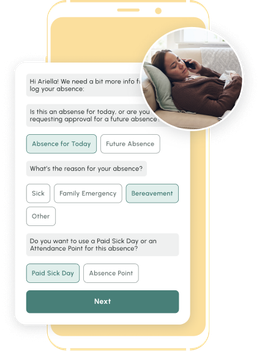
No one wants to talk to their boss or a 1-800 stranger to call off. Text changes everything - Reducing No Call No Shows.
About the Author

Sheila Stafford, CEO & Co-Founder, TeamSense | Former Manufacturing Leader at GM, Whirlpool, and Fluke
Sheila Stafford is CEO and co-founder of TeamSense. Before launching TeamSense in 2020, she built her career inside manufacturing, starting as a manufacturing engineer at General Motors and later leading teams and product work at Whirlpool. She also served as a general manager at Fluke, where she led the Industrial Imaging business.
That background shapes how she writes about manufacturing operations, absenteeism, frontline communication, and workforce visibility. Stafford has worked close to plant operations, supply chain, product development, and the day-to-day realities of frontline teams. At TeamSense, she works directly with manufacturers on attendance and communication challenges, and her work has also appeared on Forbes Business Council.
