
Fix the root cause of No-Call No-Show with help from TeamSense
Table of Contents
- The core misconception: "More people" equals "More coverage"
- What "skill coverage" means on the factory floor
- Why headcount-based planning fails in manufacturing
- Hidden manufacturing skills gap, staffing gaps, manufacturing leaders often miss
- The role of technology in skill coverage and workforce planning
- A practical framework: headcount vs skills matrix coverage in manufacturing
- How to measure skill coverage (without overcomplicating it)
- Tie skill coverage to operational outcomes (OEE lens)
- How to close gaps: build resilience with training, cross-coverage, and standard work
- A leader's checklist for preventing hidden coverage risk
- Common mistakes when shifting from headcount to skill coverage
- Final Thoughts
You can look at the schedule and think you're fully staffed. Then the shift starts, and it’s clear something’s off.
Every slot might be filled, but the shift still struggles. You miss the schedule. A quality issue pops up. One machine turns into a bottleneck because the person running it isn’t the one who usually does. The problem isn’t just headcount. Coverage is really about capability and timing. Having the right number of people scheduled doesn’t help if the right skills aren’t on the floor when production needs them.
And for a lot of manufacturers, that gap is getting harder to manage. Experienced workers are retiring, new technology is changing what jobs require, and it’s not always easy to replace those skills overnight.
The core misconception: "More people" equals "More coverage"
Headcount is a simple number, so it is tempting to use it as the scoreboard. In manufacturing, 'headcount' is often used for budgetary planning, hiring targets, and ensuring operational capacity. If the plan calls for 18 people and 18 people show up, it feels like the staffing problem is solved.
On the floor, “coverage” means you can run safely, on schedule, and at spec, across every shift, with the constraints you actually have. Those constraints are real: certain assets, processes, customer specs, and authorizations are not interchangeable.
That is why hidden staffing gaps can hang around even when the roster looks full. You are staffed by quantity, but short on capability where it matters. Addressing these skills gaps requires strategic hiring practices, not just filling positions. Even getting an accurate count of who is actually present, not just scheduled, can require better systems than a phone tree or voicemail box. Some teams use solutions like TeamSense and structured shift coverage planning in manufacturing to capture call-outs in real time so supervisors know the true starting headcount before the shift gets underway.
What "skill coverage" means on the factory floor
Skill coverage is having the right skills, on the right shift, in the right area, with the right authorization level to run the work without heroics. It is not just “do we have enough bodies,” it is “do we have enough qualified capability at the point of use?”
On most lines, skill coverage includes process skills like setup, changeover, and first-piece validation. It also includes asset-specific skills, like who can run that one CNC, press, SMT line, or packaging line without grinding through scrap and downtime.
Quality skills matter just as much, especially when sign-offs are required. If the only person who can run the inspection, complete SPC checks, or disposition a deviation is gone, your headcount can look fine while product sits on hold.
Maintenance interface skills are often overlooked. Basic troubleshooting, knowing what to check before calling maintenance, and coordinating LOTO the right way can be the difference between a 10-minute stop and an hour of chaos.
Skill coverage also needs to account for other skills such as digital literacy, change management, critical thinking, and leadership, which are increasingly important as AI and technology evolve. AI is changing the nature of work, requiring new skills like digital literacy and change management to keep up with technological disruptions.
Also, skill coverage has levels. “Can run” is not the same as “can run independently,” and “has done it once” is not the same as “is proficient.” As technology advances, organizations must focus on evolving skills and continuously adapt their workforce to meet new job requirements driven by AI and automation.
The Costly Impact of Absenteeism on Manufacturing Operations
Learn how chronic, unplanned absenteeism is a costly impediment to manufacturing productivity and efficiency, and how you can reduce absenteeism.
Why headcount-based planning fails in manufacturing
Headcount-based planning fails because manufacturing is full of single points of failure. Headcount focuses on volume, simply counting the number of employees, while skill coverage focuses on competence and versatility, ensuring the company has the right mix of skills to meet operational needs. One setup tech, one person who knows the bottleneck machine, one quality tech who understands a special spec, and suddenly the whole schedule depends on one badge.
It also fails because time punches holes in your “perfect” staffing plan. PTO, sick days, FMLA, training time, audits, meetings, and incident response all pull capability away from the work, even when the headcount number stays steady. Platforms like TeamSense are sometimes used to standardize absence reporting and replace monthly absence reports that hide daily staffing risk, so the actual headcount picture is visible and consistent before coverage decisions get made.
Manufacturers and companies are increasingly focused on finding the right capabilities and skills rather than just filling positions, recognizing that skill coverage is critical for operational resilience and competitiveness.
Shift distribution is another common trap. Skills often concentrate on the day shift, while nights and weekends are left with newer teams and fewer qualified problem-solvers.
Then role compression kicks in. Leads and supervisors fill gaps on the line, which steals time from coaching, tier meetings, and proactive issue prevention.
Aging workforces and shrinking labor participation are significant issues in Europe and North America, leading to labor shortages and making it even more important for companies to address skills gaps and upskill their employees.
This gets worse as the labor market tightens. Deloitte and The Manufacturing Institute project US manufacturing could need up to 3.8 million new workers between 2024 and 2033, with up to 1.9 million at risk of going unfilled if challenges are not addressed.
Hidden manufacturing skills gap, staffing gaps, manufacturing leaders often miss
One pattern looks like this: everyone is busy, but the work does not move. A few qualified people become the “airport control tower” for setups, restarts, quality checks, and troubleshooting, while others wait for instructions or approvals.
Overtime can mask the problem for months. When one or two skilled people work extra, coverage looks okay on paper, but you are building a fragile system that breaks the moment they take a vacation or burn out. Tools such as TeamSense and targeted strategies to reduce overtime in manufacturing can help surface patterns in overtime and call-out data, making it easier to spot when coverage is being carried by a small group before burnout or absence makes the gap undeniable. High turnover can create yield waste and disrupt coordinated group tasks, which directly impacts overall production costs.
Temp labor can boost headcount fast, but it rarely fills capability gaps fast. If the constraint is setup proficiency, quality authorization, or asset-specific knowledge, adding general labor does not unblock the plan.
Certifications and qualifications expiring is another quiet failure mode. If your matrix is not tied to expiry dates, you can lose coverage overnight without realizing it until a customer audit, a safety review, or a quality hold forces the issue.
New product introductions also create instant coverage debt. The process might be “similar,” but inspection points, torque requirements, programming steps, or changeover sequences can be different enough to require new competence.
Tribal knowledge is the big one. If changeovers and troubleshooting live in someone’s head, the plant is one resignation away from longer startups and recurring downtime, making it harder to follow a proactive plant manager’s playbook for minimizing downtime. In fact, a third of manufacturing employees are currently looking for new jobs, often in adjacent industries like warehousing, and this trend persists despite wage increases in manufacturing.
That risk shows up in performance. A 2025 Fluke survey reported 55% of US manufacturers were hit by unplanned downtime in the past year. Given the significant financial impact of downtime in manufacturing, business leaders must consider these workforce dynamics in their planning to align business objectives with workforce strategies and reduce organizational risk.
The same Fluke release cited an average downtime cost of $400,000 per hour.
The role of technology in skill coverage and workforce planning
The skills gap isn't something we'll deal with someday; it's hitting plant floors right now. You know the drill: qualified operators retiring, new hires who need months to get up to speed, and managers scrambling to cover shifts with people who aren't quite ready. We're looking at millions of open manufacturing jobs in the next ten years, and the math doesn't add up unless we get smarter about how we build skills.
Plants are starting to use better tools to figure out who knows what and where the gaps are. Instead of guessing or keeping it all in someone's head, we're getting data on what skills we actually have versus what we need. These systems, including modern attendance tracking software for hourly employees, help us see which departments are thin, what training to focus on next, and where we're going to have problems before the next round of retirements hits. It beats the old way of realizing you're short-handed when someone calls in or gives notice.
Training doesn't have to mean pulling people off the floor for a week anymore. Workers can access courses when they have time, maybe during breaks or after a shift. Whether it's learning new automation systems, understanding process improvements, or getting better at troubleshooting, people can build skills without shutting down production. Some plants are even using VR headsets to let workers practice on expensive equipment without risking downtime or safety issues. When you invest in your people like this, they tend to stick around.
A good skills tracking system shows supervisors exactly what their crew can handle in real time. No more guessing if you can run that complicated changeover or wondering who to call when the regular guy is out sick. You can see gaps coming before they turn into production problems, assign the right people to the right jobs, and reduce overtime without burning out your crew to avoid those last-minute scrambles that cost overtime and stress everyone out.
As plants add more automation and smart systems, we need people who can work with this equipment, not just around it. Companies are teaming up with trade schools, community colleges, and groups like the Manufacturing Institute to train people for the jobs we actually have. These partnerships mean new workers show up knowing something useful instead of starting from zero.
Technology isn't just about replacing people; it's about making our workforce planning actually work. When you can see skills gaps before they become production problems, train people without killing productivity, and keep good workers from leaving for better opportunities elsewhere, you're in much better shape. Plants that figure this out will handle whatever comes next a lot better than the ones still winging it.

A practical framework: headcount vs skills matrix coverage in manufacturing
Think about staffing on two axes. One axis is headcount supply: how many people are available per shift after planned absences and assignments.
The other axis is skill coverage demand: which competencies must be present to run the schedule safely and profitably. This includes who can set up, who can run independently, who can sign off quality steps, and who can respond to issues on critical assets.
A practical way to manage this is a "coverage map." Put work areas or value streams on one side, shifts on the other, and layer in the critical skills required for each area.
From there, define minimum viable coverage. That means the minimum qualified operators at the constraint, the minimum sign-off authority per shift, and the minimum maintenance response capability for critical assets.
The key rule is simple: treat skill coverage like a constraint, just like material availability or machine capacity. If you would not schedule a job without the right tooling, do not schedule it without the right qualifications.
How to measure skill coverage (without overcomplicating it)
Start by identifying critical roles and skills. Focus on bottlenecks, safety-critical work, quality approvals, complex setups, and anything that routinely drives downtime or schedule misses.
Next, define proficiency levels with plain language. A practical scale is: trainee, supervised, independent, and can-train-others.
Then build a skills matrix by line, cell, or shift team. Track who can do what, at what level, and what expires, including certifications, qualifications, and required refreshers. Monitoring metrics like absence rate percentage alongside revenue per employee helps determine if a company is overstaffed or if current staff are underperforming. Total Cost of Ownership (TCO) per employee can also be used to compare the costs of high-skilled labor against low-skilled labor costs.
After that, set coverage rules that match how your plant runs. Examples include: at least one independent setup-capable person per shift, and at least one authorized quality sign-off per shift.
Finally, review it weekly as part of production planning and tier meetings. Skill coverage is not an annual HR exercise, it is a weekly operations control item. Some teams pair their skills matrix review with structured employee attendance tracking best practices and attendance data from platforms like TeamSense to see which gaps are driven by skill shortages versus who simply was not present—keeping the two problems distinct so they can be solved differently.
If you need a compliance anchor, ISO 9001 competence expectations are a good reference point for the idea that competence needs must be defined, gaps addressed, effectiveness evaluated, and evidence retained.
Tie skill coverage to operational outcomes (OEE lens)
When skill coverage is thin, Availability is usually the first hit. You lose time waiting for the one person who can troubleshoot, or you extend downtime because the response team is not qualified on that asset, undermining any effort to follow a structured playbook for smooth operations and minimizing downtime.
OEE breaks down into Availability, Performance, and Quality. Availability is defined as Run Time divided by Planned Production Time.
Performance losses often show up as slow running, micro-stops, and extended changeovers. If a team is not confident, they will run slower, double-check more steps, and stop more often to ask for help.
Quality losses are the most expensive because they can travel. Training gaps lead to missed inspections, incorrect checks, rework loops, scrap, and sometimes customer issues that take weeks to unwind.
How to close gaps: build resilience with training, cross-coverage, and standard work
Start with cross-training, where it pays back fastest. Prioritize constraints and safety-critical roles first, then build outward so each shift has bench strength instead of one expert.
Upskilling and reskilling offer significant benefits in manufacturing, including bridging the skills gap, saving costs, and enhancing productivity. By investing in workforce development and addressing issues like excessive absenteeism in the workplace, companies can gain a competitive advantage.
Upskilling means advancing employees' current skills through additional education and training to help them adapt to new technologies. Reskilling involves teaching workers entirely new skill sets, enabling them to transition to new roles or career paths. These strategies help develop the skills of existing workers rather than hiring new recruits, making them a cost-effective alternative to recruiting and onboarding, which can be expensive and time-consuming. However, quality training programs for upskilling and reskilling can be costly, especially for specialized or cutting-edge technologies. It's also important to ensure worker engagement, as a lack of engagement can derail upskilling and reskilling efforts due to resistance to change or fear of failure.
A simple tactic is to create coverage pairs. Match a strong performer with a developing one, schedule them together during real work, and make the expectation clear: the goal is independent capability, not shadowing forever an approach that also helps reduce no call no show impacts on team morale by building stronger team connections and accountability.
Standardize how training happens so it does not depend on who is teaching that week. Use job breakdowns, train-the-trainer discipline, and verification steps like observations and sign-offs, not just “watched a video,” since better training and attendance practices are key levers for reducing costly manufacturing downtime.
TWI is one example of structured job instruction that has been used to standardize work training. Lean Enterprise Institute notes that TWI was developed during WWII and includes Job Instruction, Job Methods, and Job Relations.
Also, schedule training like production. If training time is not planned with a backfill strategy, it becomes optional, and optional work never survives a hot week.
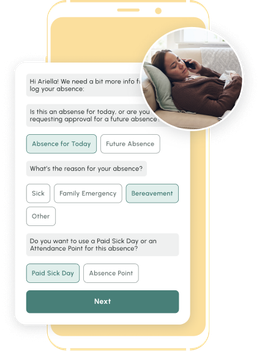
No one wants to talk to their boss or a 1-800 stranger to call off. Text changes everything - Reducing No Call No Shows.
A leader's checklist for preventing hidden coverage risk
Check next week's schedule against known absences before you lock the plan. If the plan assumes your one setup expert will be present, it is not a plan, it is a hope.
Confirm coverage for changeovers and special processes. If a product family requires specific qualifications, make sure those people are assigned, not just "on shift."
Watch certification and qualification expiries that are coming due. Put them on the same calendar you use for PMs and audits, because the operational impact is just as real.
Place new hires where they reduce single points of failure, even if it is not the most convenient spot short-term. If the only person who can do a task is also the person training the new hire, you are not reducing risk.
For red flags, look for overtime concentrated in specific roles, chronic delays around specific assets, and frequent escalations to the same individuals. Those are coverage gaps showing themselves through behavior and clear signals that you need better overtime management strategies in manufacturing.
Make this a rhythm, not a project. It belongs in tier meetings, S&OP inputs, or a weekly staffing huddle, wherever decisions get made.
Common mistakes when shifting from headcount to skill coverage
One mistake is building a skills matrix so detailed nobody updates it. If it takes a week to maintain, it will be out of date by the time you use it.
Another mistake is relying on self-assessment without verification. People are not lying, but confidence and competence are not the same thing, especially on rare changeovers or tricky setups.
A third mistake is treating training completion as competence. Attendance is not capability, and a checked box does not mean someone can run independently on a bad day.
Leaders also tend to focus only on operators. If you ignore leads, setup, maintenance interface, and quality sign-off roles, you will still have coverage gaps, just in different places.
Finally, do not ignore shift distribution. A plant can be "fully skilled" in the aggregate while nights and weekends are exposed, which is exactly when problems get more expensive and when gaps in automated attendance management that reduces no call no show are most painful.
Final Thoughts
Headcount is a lagging, incomplete proxy for coverage. It tells you how many people you have, not whether you can run safely, hit the schedule, and protect quality across every shift, or whether your automated employee call-in solution is giving you real-time visibility into who is actually available.
Skill coverage is measurable and manageable when you treat it like an operational constraint, build a simple skills matrix, use tools like an absence rate percentage calculator, set minimum coverage rules, and review it weekly with the same discipline you apply to production.
To succeed, manufacturers need a clear sense of their organizational needs, capabilities, and skills gaps, especially as digitization and AI reshape the industry. Skills strategies should be tailored to address the unique needs and objectives of each organization. Additionally, skills programs should be tied to a meaningful business case, with outcomes measured against the organization's broader objectives.
If you want to start without boiling the ocean, pick one value stream or one bottleneck area. Map the critical skills by shift, set minimum viable coverage, and close the gaps with cross-training, standard work, and verified competence.
About the Author

Sheila Stafford, CEO & Co-Founder, TeamSense | Former Manufacturing Leader at GM, Whirlpool, and Fluke
Sheila Stafford is CEO and co-founder of TeamSense. Before launching TeamSense in 2020, she built her career inside manufacturing, starting as a manufacturing engineer at General Motors and later leading teams and product work at Whirlpool. She also served as a general manager at Fluke, where she led the Industrial Imaging business.
That background shapes how she writes about manufacturing operations, absenteeism, frontline communication, and workforce visibility. Stafford has worked close to plant operations, supply chain, product development, and the day-to-day realities of frontline teams. At TeamSense, she works directly with manufacturers on attendance and communication challenges, and her work has also appeared on Forbes Business Council.
