

Fix the root cause of No-Call No-Show with help from TeamSense
Table of Contents
- Why low absence rates can still coexist with missed production targets
- The metric problem: attendance looks stable while capacity is not
- The hidden staffing losses that hurt output before they show up in absence data
- Presenteeism, fatigue, and partial availability
- Skill coverage gaps and bottleneck roles
- How hidden labor loss turns into missed production targets
- The hidden factory effect on staffing-constrained lines
- Talent pipeline: why future staffing matters for today’s output
- Flexible staffing: adapting to unpredictable labor needs
- Cost implications of hidden staffing shortfalls
- What operations and HR should measure instead
- Practical KPIs that reveal the real staffing problem
- How to reduce target misses when absenteeism is not the obvious problem
- Immediate operational fixes versus longer-term workforce planning
A plant can look fully staffed on paper and still miss the day. That is the disconnect a lot of teams run into when they rely on the absence rate as the main signal for labor health. Effective staffing is a business-critical issue, directly impacting overall business objectives, productivity, and operational stability.
Absenteeism undermines productivity not only through direct loss of hours but also by affecting work quality and employee morale, leading to a wider impact on the organization.
In 2024, the absence rate for full-time manufacturing workers was 2.8%, compared with 3.1% across the private sector, while production occupations were at 3.4%. Those numbers matter, but they do not tell you whether the right people were in the right spots, whether they were fully productive, or whether the line had enough depth to protect its bottlenecks. Consistent attendance is crucial for maintaining productivity and minimizing disruptions, so tracking attendance patterns and addressing absentee causes is essential for effective workforce planning. To effectively quantify absenteeism's impact, organizations should track both absenteeism rates and the associated productivity losses from unplanned absences, not just missed days, using tools such as an absence rate percentage calculator to understand the full effect on operations.
That is why missed production targets and staffing problems often show up before a dashboard ever flashes red on absenteeism. What hurts output is not just who is absent. It is the gap between scheduled labor and effective labor capacity. Staffing issues can create a ripple effect across the business, impacting production timelines, costs, and overall operations.
A proactive workforce strategy goes beyond tracking absence rates, incorporating flexible planning and data-driven decision-making to build resilience and scalability into business operations.
Why low absence rates can still coexist with missed production targets
Low absenteeism can create a false sense of control. If most people clocked in, leadership may assume labor was not the reason output slipped.
On the floor, production depends on role coverage, skill fit, pace, and stability. A line does not care that the plant-wide attendance number looked fine if a constraint machine ran short on qualified coverage for half the shift. In manufacturing roles, having experienced employees is crucial for maintaining efficiency and quality without them, productivity drops, errors increase, and costs rise. That is one reason some teams look beyond monthly attendance rollups and use tools such as TeamSense to surface same-day staffing disruptions earlier, especially when the real issue is role coverage rather than plant-wide headcount. The ability to quickly fill roles, particularly during periods of unplanned absences, is essential to keep operations running smoothly.
That matters even more in a tight labor market. The Manufacturing Institute reports that 3.8 million manufacturing positions are expected to open by 2033, and 1.9 million could go unfilled. In that kind of environment, even small disruptions hit harder because there is less slack in the system. Recruiting for permanent roles during demand surges can be slow and inflexible, so utilizing temporary staffing solutions to fill roles quickly is often necessary to address short-term or seasonal needs.
Staffing shortages in manufacturing can lead to production line slowdowns, missed deadlines, and increased costs, creating a ripple effect across operations. Forecasting labor needs is essential for preventing production delays, as it allows companies to proactively recruit and onboard staff before demand surges.
The metric problem: attendance looks stable while capacity is not
Attendance reports usually answer a narrow question: who was present versus absent. They do not show whether scheduled headcount matched the line plan, whether critical jobs had trained coverage, or whether supervisors spent the first hour moving people around just to get started. Performance monitoring tools such as attendance tracking software for hourly employees can provide real-time visibility into attendance, lateness, and absenteeism, supporting better staffing decisions.
That is the core measurement problem. Total headcount, scheduled headcount, and effective labor capacity are not the same thing, and when managers treat them as the same, they miss real staffing risk. The operations team plays a key role in ensuring that staffing levels are adequate for each shift, helping to prevent production delays.
Plant-wide averages hide bottlenecks. A stable absence rate can sit next to a weak startup, a delayed changeover, or a line that never gets up to standard speed because the wrong station is thinly covered.
Inadequate staffing levels can lead to decreased morale and productivity, and research shows that understaffing can result in a 36% loss in productivity due to unfilled roles and unplanned absences.
The Costly Impact of Absenteeism on Manufacturing Operations
Learn how chronic, unplanned absenteeism is a costly impediment to manufacturing productivity and efficiency, and how you can reduce absenteeism.
The hidden staffing losses that hurt output before they show up in absence data
Some labor loss is visible. A callout is easy to count, and a no-show is easy to explain.
The harder problem is hidden loss. It shows up as late arrivals, early departures, workers who are present but not fully effective, fatigue from repeated overtime, thin cross-training, and supervisors burning time to patch holes instead of running the operation. Tracking unplanned absences is crucial to understand their full impact on productivity, as they can significantly disrupt staffing levels and output, which is why many plants focus on accurately calculating and understanding employee absenteeism rates.
Those losses are expensive beyond any single shift. Chronic absenteeism can lead to an average productivity loss of 36% due to unplanned absences, which is significantly higher than the 22.6% loss associated with planned absences. CDC says chronic diseases and injuries in the workforce cost U.S. employers $575 billion in lost productivity each year, based on 2019 data. High turnover causes a 'knowledge drain,' where experienced staff are replaced, leading to reduced productivity. That does not mean every plant should blame health factors for every target miss, but it does confirm that labor capacity is broader than simple attendance.
Utilizing the existing team for cross-training can reduce downtime when key staff are absent, and shifting focus from raw headcount to headcount vs skill coverage in manufacturing helps ensure those backups actually protect your bottlenecks.
Presenteeism, fatigue, and partial availability
Presenteeism is what it sounds like on the floor. Someone is on site, badge scanned, and counted as present, but they are working slower, reacting later, or making more mistakes because they are sick, worn down, distracted, or not physically at full strength.
A NIOSH-hosted safety guide says presenteeism has been shown to reduce work productivity by 30% or more. That helps explain the absenteeism hidden impact many plants feel when staffing looks adequate on paper but throughput still falls short.
Fatigue compounds the problem. OSHA states that working shifts longer than 8 hours will generally result in reduced productivity and alertness. If a crew is leaning on extended hours to cover gaps, the plant may be trading today’s attendance stability for tomorrow’s slower pace and higher error risk. Safety issues can also arise when staffing gaps force overworked or under-trained staff to take on more than they can safely handle, increasing the risk of errors and accidents, especially in plants struggling to reduce overtime without burning out their crew.
Even partial availability creates instability. A late start, an early departure, a restricted-duty assignment, or time pulled into meetings can break coverage at exactly the wrong moment, especially on a line with little backup depth. Hiring for reliability by screening for behaviors such as attendance, punctuality, and work ethic is crucial for cultivating a dependable workforce.
Permanent staff provides greater stability and consistency, helping maintain quality and safety standards, while relying on temporary or under-trained workers can make it harder to avoid safety and quality issues.
Skill coverage gaps and bottleneck roles
Most staffing problems are not evenly spread across the plant. They collect around bottleneck stations, specialized equipment, certified roles, and jobs that require real machine knowledge rather than basic labor coverage.
That is why cross-training depth matters more than gross headcount. A plant can have enough bodies to fill the schedule and still be short where output is actually decided. Effectively onboarding new hires and new workers, with systematic training and clear expectations, ensures they can contribute quickly and help close skill coverage gaps, reducing the chance that even a single call-off triggers the kind of line productivity loss caused by one absence in manufacturing.
When backups are missing, supervisors start borrowing labor from nearby areas. That may keep the bottleneck running for the moment, but it often creates a second problem somewhere else, such as a weaker feeder process, a slower inspection point, or a delayed material move. Cross-training current employees for multiple roles increases operational flexibility and helps prevent these secondary issues.
Labor tightness makes those role-specific gaps harder to absorb. The Manufacturing Institute also notes the industry has averaged about 500,000 open jobs over the prior 12 months in the context of its workforce address. If the hiring bench is thin, coverage depth becomes an operational issue, not just a recruiting issue. Building a talent pipeline during slower periods allows companies to activate relationships with pre-screened candidates, reducing the time needed to fill roles during demand surges and preventing production delays.
How hidden labor loss turns into missed production targets
Hidden labor loss rarely announces itself as a major breakdown. More often, it shows up as a slower start, a rougher handoff, longer changeovers, more waiting, more resets, more minor stops, and a line that never quite catches up.
Designing temporary roles with a clear purpose and aligning them with operational demands and project milestones can enhance productivity and reduce disruption, especially when paired with strategies to regain control of labor costs and overtime.
That matters because output is cumulative. If the first run starts late, the second run changes over slowly, and the crew spends the middle of the shift fighting small interruptions, the target can be gone without a single dramatic event.
Fatigue and skill mismatch also affect quality. When people are stretched, less familiar with the task, or rotating into roles they do not own every day, first-pass yield can slip, and rework starts eating labor that was supposed to make a sellable product. The financial impact of understaffing includes not only reduced output but also increased recruiting and training costs, which can erode profit margins over time.
Maintaining a pool of vetted, high-performing temporary workers enables rapid deployment during absences, and implementing digital onboarding tools can reduce the time for new hires to reach full productivity.
The Costly Impact of Absenteeism on Manufacturing Operations
Learn how chronic, unplanned absenteeism is a costly impediment to manufacturing productivity and efficiency, and how you can reduce absenteeism.
The hidden factory effect on staffing-constrained lines
Operations teams already know the feel of hidden loss, even if they do not label it that way. OEE defines performance loss as time when production is running but not as fast as it should, and it describes that loss as less visible than downtime.
Optimizing the shop floor through effective hiring, onboarding, and training strategies is crucial to minimize delays and improve productivity, and real-time attendance data analysis for proactive workforce planning can highlight where those efforts will have the most impact.
That is why staffing strain often shows up in throughput before it shows up in formal downtime. The machine is technically running, but the line is dealing with small stops, slow cycles, delayed responses, or hesitant operation that keep it below expected pace.
The hidden factory idea is useful here because it frames untapped capacity as lost time inside normal operations, not just during obvious shutdowns. When labor is thin at the constraint, a lot of the damage lands in that gray area where the line is moving but underperforming. Implementing advanced manufacturing technologies can help alleviate skills gaps by automating repetitive tasks.
Talent pipeline: why future staffing matters for today’s output
Having a good talent pipeline is what keeps your plant running when things get crazy. Instead of just posting jobs and hoping for the best, smart plants team up with staffing partners to keep a steady flow of skilled workers ready to go. When someone calls off, or you get a rush order, you've got people lined up who can jump in and get the job done. It beats scrambling at the last minute when production is on the line.
When demand spikes or half your second shift calls off with the flu, you can respond fast instead of watching your line slow down. Good staffing partners know how to find and screen workers so your supervisors can focus on hitting production numbers instead of playing phone tag, trying to fill empty spots. No more production delays because you're short-handed. No more mandatory overtime that burns out your crew. You can actually plan ahead and see problems coming instead of always fighting fires.
A solid talent pipeline gives you the flexibility to handle whatever gets thrown at you without missing your numbers. It's not fancy, but it works. When your competitors are scrambling to find bodies, you're running steady shifts and shipping on time. That's what keeps the lights on and the business growing, especially when the market keeps changing the rules on you.
Flexible staffing: adapting to unpredictable labor needs
You know how it goes one day you're running steady production, next day a big order drops and you need twenty more people by Monday. Or half your second shift calls out sick and you're scrambling to cover machines. That's just life on the plant floor. Temp agencies get this. They keep people ready to jump in when your regular crew can't handle a sudden rush or when you're short-handed.
When that happens, temps help you avoid the real pain. No production delays. No missed shipments. No angry customers calling your boss. Sure beats trying to pull overtime out of your regular folks every time demand spikes or someone quits without notice. And you're not stuck training new permanent hires every month just to watch them leave after six weeks.
Bottom line temps give you what you need when you need it. Rush order comes in? You've got people. Three guys call out on Monday? You're covered. Your line keeps running, shipments go out on time, and you're not constantly firefighting staffing problems. That's what keeps plants competitive when orders swing up and down.
Cost implications of hidden staffing shortfalls
When people don't show up for their shifts, it hits your plant harder than what shows up in the attendance reports. You've got gaps on the line, machines running slower than they should, and the folks who did show up are getting burned out from picking up the slack. Those call-offs and no-shows? They cost way more than just the missed hours. Your line slows down, deadlines get missed, and someone's working overtime they didn't plan for.
This stuff snowballs fast. Miss production targets because you're short-handed, and now you're dealing with angry customers and lost orders. The real kicker? All those hidden costs start piling up - overtime pay, people quitting because they're tired of covering for others, and safety incidents when your crew is stretched too thin. Before you know it, what looked like a simple attendance problem is eating into your numbers and messing with everything you're trying to accomplish.
Here's the thing - you can't just hope people show up. You need to get ahead of this stuff and have a real plan for when shifts fall apart. Figure out your coverage gaps before they happen. Support the people who are showing up every day. Make sure you've got enough hands to hit your numbers without running everyone into the ground. Because at the end of the day, this isn't just about filling empty spots on the schedule. It's about keeping your operation running smooth and keeping costs where they belong.
What operations and HR should measure instead
If absence rate is only a surface indicator, plants need a better set of staffing measures. The goal is to connect labor conditions to actual line performance, not just track who was marked absent.
Data helps inform staffing strategies and optimize hiring processes by providing concrete evidence for decision-making, rather than relying on intuition, and structured attendance data analysis turns those signals into specific, actionable changes.
Start with role-based coverage. Measure whether each shift had full staffing for critical positions, how much backup depth existed for those roles, and how often the schedule had to be changed inside the shift.
Then add indicators that show strain. Overtime reliance, partial-shift losses, cross-training coverage, startup attainment, output per labor hour, and micro-stop patterns by crew tell you more about productive capacity than a single attendance KPI ever will. Building flexible talent pipelines enables organizations to shift from reactive hiring to proactive workforce planning, filling gaps faster and avoiding unnecessary strain on permanent teams.
Data-driven hiring can reduce the time-to-hire by identifying high-quality sources of talent.
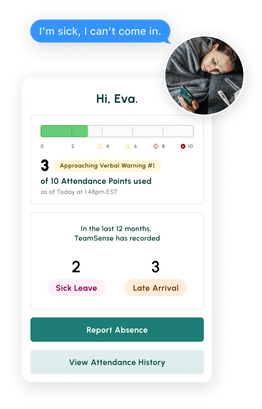
Is your call-in process terrible? Reduce no-shows and absenteeism by up to 40%.
Practical KPIs that reveal the real staffing problem
A practical scorecard should include role-critical fill rate, hours lost to partial attendance, overtime hours by line or shift, and cross-trained backup ratio. Those measures tell you whether coverage was real or just nominal.
Performance monitoring is essential for tracking real-time staffing issues, providing visibility into attendance, lateness, and absenteeism, and supporting timely staffing decisions to maintain productivity, especially when it follows employee attendance tracking best practices for compliance and productivity.
It should also track output per labor hour, first-hour startup attainment, and small-stop frequency during understaffed periods. Those numbers help operations see whether labor strain is turning into performance loss instead of waiting for a formal downtime code.
Trend lines matter more than snapshots. A low monthly absence rate can sit next to a repeating pattern of weak Monday startups, heavy end-of-week overtime, or chronic schedule reshuffling on specific crews. Some teams use solutions like TeamSense to standardize and timestamp callouts so those trends can be reviewed by shift or role instead of getting buried in a plant-wide average. Utilizing smart scheduling technology can improve scheduling efficiency by approximately 30%.
Utilizing staffing agencies for temp-to-hire positions allows firms to evaluate a worker's performance before making permanent offers.
How to reduce target misses when absenteeism is not the obvious problem
The fix starts with protecting constraints first. If a plant knows which roles control throughput, those jobs should get the strongest backup assignments, the clearest escalation rules, and the most disciplined daily coverage planning.
To stay ahead in workforce management and maintain a competitive edge, organizations must adopt proactive strategies that ensure continuous productivity and adaptability, including more accurate tracking of employee absences with modern tools.
Cross-training also needs to be practical, not cosmetic. A skills matrix should show who can truly run the job at pace, who can only cover briefly, and where the plant is one reassignment away from trouble. Planning for seasonal demand is essential, as flexible staffing models combining permanent employees with temporary, contract-to-hire, or on-call workers provide the agility to cover demand spikes without overburdening workers.
Fatigue needs the same level of attention as any other production risk. OSHA says extended shifts generally reduce productivity and alertness once work goes beyond 8 hours. If overtime is being used as a permanent staffing patch, the plant should expect some payback in slower performance.
Operations and HR should also compare the same day from different angles. If a shift missed target, review attendance, partial attendance, overtime, crew mix, coverage at bottlenecks, and line-performance data together instead of treating them as separate reports.
Investing in comprehensive training can achieve up to a 91% retention rate among graduates of upskilling programs.
Immediate operational fixes versus longer-term workforce planning
In the short term, plants can tighten handoffs, pre-assign backup coverage for bottleneck roles, set guardrails on overtime, and make sure supervisors know which constraints must be protected first. These are simple moves, but they reduce the scramble that burns the first part of the shift.
A proactive workforce strategy is essential, combining immediate fixes with long-term planning to ensure resilience and scalability in operations, and often includes structured programs to reduce absenteeism in the workplace so staffing is more predictable.
In the middle term, the work is more structural. That means improving skills matrices, redesigning schedules where fatigue is common, coding partial attendance more clearly, and analyzing where role depth is too thin for normal variation. Temporary recruitment strategies can help companies quickly adjust their workforce in real time, mitigating production delays while maintaining quality and speed, especially when paired with streamlined call-off processes that avoid the pitfalls of the traditional “call a manager” approach to absence reporting.
Long term, this becomes a workforce resilience issue. With 3.8 million manufacturing jobs expected to open by 2033 and 1.9 million projected to go unfilled, plants cannot rely on hiring alone to solve coverage fragility. The better path is to build a labor plan that connects hiring, retention, training, and daily operations around the jobs that truly drive throughput.
Low absence rates do not rule out staffing-related causes of missed production targets. They only tell you that a limited share of the workforce was counted absent during a given period.
The real question is whether the plant had enough effective labor capacity in the roles that matter most. When you look at presenteeism, fatigue, partial attendance, skill coverage, and line-level performance together, the reason behind the miss usually gets a lot clearer.
If production targets keep slipping while attendance looks fine, audit the hidden labor loss in your operation. Review coverage by role, backup depth, schedule volatility, overtime dependence, and throughput patterns by crew. That is where the real staffing story usually shows up. Staffing gaps create long-term problems that extend beyond missed shifts, leading to employee burnout, high turnover, and compromised safety.
About the Author

Sheila Stafford, CEO & Co-Founder, TeamSense | Former Manufacturing Leader at GM, Whirlpool, and Fluke
Sheila Stafford is CEO and co-founder of TeamSense. Before launching TeamSense in 2020, she built her career inside manufacturing, starting as a manufacturing engineer at General Motors and later leading teams and product work at Whirlpool. She also served as a general manager at Fluke, where she led the Industrial Imaging business.
That background shapes how she writes about manufacturing operations, absenteeism, frontline communication, and workforce visibility. Stafford has worked close to plant operations, supply chain, product development, and the day-to-day realities of frontline teams. At TeamSense, she works directly with manufacturers on attendance and communication challenges, and her work has also appeared on Forbes Business Council.
