
Fix the root cause of No-Call No-Show with help from TeamSense
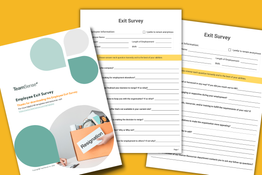
Download Your Exit Survey Template For Employees For Free
Enter your company email below to get instant access to the template.
The Only Printable Exit Interview Template You’ll Need
Why the Exit Survey is Your Best Retention Tool
An exit survey isn't just a formality or a final HR "to-do" item. It is a strategic diagnostic tool. When an employee leaves, they are often more honest about company culture, management gaps, and operational friction than they were during their tenure.
By using our Printable Exit Interview Template, you move beyond the "Why are you leaving?" question and begin to uncover the "What can we fix?" answers.
The 3 Goals of a Great Exit Interview
Identify Patterns: Is there a specific shift, supervisor, or department with higher-than-average turnover?
Protect Your Employer Brand: Giving an employee a final platform to be heard reduces the likelihood of negative Glassdoor reviews or "venting" to remaining staff.
Benchmark Compensation: Discover if your competitors are luring talent away with specific benefits or pay scales you haven't yet matched.
How to Get Honest Answers (Without Resistance)
The biggest hurdle to a successful exit survey is "filtered" answers. Employees often fear "burning bridges" and may give generic reasons like "better opportunity." Our template includes an anonymous option, but here are three ways to ensure you get the truth:
Timing is Everything: Send the survey link or provide the paper template 24–48 hours before their final walk-out. This gives them time to reflect without the immediate stress of their last hour on the clock.
Explain the "Why": Explicitly state that their feedback will be used to improve the experience for their former teammates. Frontline workers, in particular, are often motivated by helping the peers they are leaving behind.
Digital vs. Paper: While our printable template is perfect for in-person offboarding, digital delivery often yields longer, more detailed comments.
What’s Inside the 13-Question Questionnaire?
We’ve curated these 13 questions to cover the full spectrum of the employee experience:
Management Quality: Did the employee feel supported by their direct supervisor?
Resource Availability: Did they have the tools (and technology) needed to do their job safely and efficiently?
Culture & Belonging: Did they feel like a valued member of the team, or just a number?
The Breaking Point: Was there a specific "event" that triggered the job search, or was it a gradual decline?
Turning Exit Data into Staying Power
The most dangerous thing an HR department can do is collect exit surveys and let them sit in a drawer. To truly reduce employee turnover, you must close the loop:
Monthly Reviews: Aggregate the data from your templates every 30 days.
Identify "Fixable" Friction: If 50% of departing employees mention "poor communication about shift changes," that is an operational fix.
Equip Your Managers: Use the (anonymized) feedback to coach supervisors on how to better support their teams.
Stop the "Revolving Door" Before it Starts
While exit surveys help you learn from the past, TeamSense helps you manage the present. By using our SMS-based communication and attendance tools, you can catch "disengagement signals" early. When employees have a frictionless way to communicate with HR and their managers every day, you may find you need that exit survey template a lot less often.

More Resources

The Math Problem That's Driving Turnover in Your Automotive Plant
Supervisor overload in automotive plants is an arithmetic problem, not a leadership problem. The math behind turnover, overtime, and missed output at automotive suppliers and what Toyo Tires, Martinrea, and Yanfeng did about it.

The Retention Cost of Rigid Attendance Policies in Automotive Manufacturing
Rigid attendance policies quietly push good employees out of automotive plants. See how Toyo Tires used TeamSense to cut turnover from 53% to 34%.

15 of the Best Absence Management Software Systems on the Market in 2026
Picking the right absence management system for your organization is a must! This list features the top absence management systems and software on the market today.
FAQs
-
-
The purpose of an exit survey is to gather information and feedback from departing employees about their experiences at the company. The best exit interview questions can provide valuable insight into areas for improvement in regard to employee retention and overall workplace satisfaction. Offboarding surveys can be extremely valuable, especially if the company is dealing with a mass exodus or higher than-normal retention rates. An exit interview form template provide deep insight and valuable feedback into a company's culture, ineffective company policies, job description, identify trends related to human capital, and help the HR department get honest answers from former employees.
-
-
Exit surveys can be administered in a variety of ways, such as a part of an offboarding package, in person, via email, or even through an online survey platform. It's important to provide multiple options for employees to ensure they feel comfortable providing honest feedback to the exit interview questions without fear of retribution. The survey should also offer the option for anonymity if desired. Alternatively, exit survey questions can be used to guide a face to face conversation about the employee's decision and employee's perspective. Conducting an exit interview like this may be a better way to guage employee satisfaction, employee motivation, and employee engagement as follow up questions can be asked to provide deeper constructive feedback.
-
-
Exit surveys should ideally be given to departing employees as soon as they put in their resignation, while they still have fresh experiences and insights to share. However, it's important to ensure that the employee feels comfortable filling out the survey and complete all the best exit interview questions without feeling rushed or pressured by deadlines. Conducting productive exit interviews help capture data on an organization's culture, organization's policies, and feedback on the particular position and direct manager each time an employee leaves. Exit interviews should be considered a best practice.
-
-
It's important to carefully review and analyze the results of the exit interview questions in order to identify any patterns or common themes. This information can then be used to make improvements in areas such as employee retention, benefits, company culture, and more. It's also important to take steps to address any specific concerns or issues raised by individual employees in the survey. Human Resources should track the interview questions and responses for all outgoing employees to reduce employee turnover, ensure company resources are used to provide sufficient training, and gain insight into the employee experience. The results of each exit interview questionnaire ca be reviewed by an HR manager or HR business partner the former employee feedback can be used to improve employee morale and the organization's work culture.
-
-
Some important topics to cover in an exit survey include overall job satisfaction, reasons for leaving, potential improvements for the company, benefits, and compensation, work-life balance, communication and management, and company culture. It's also important to leave room for open-ended exit interview questions and additional feedback. These exit interview survey questions and each employee's answer can be used to improve employee relations and reduce employee turnover for all current and future employees.
-
-
An exit interview is typically a one-on-one conversation with the departing employee, while an exit survey is a written questionnaire that can be filled out by multiple employees. Both can provide valuable insights and feedback, but an exit survey can offer more anonymity and allow for a larger volume of responses. It's recommended to use both in tandem for the most comprehensive understanding of employee experiences and reasons for leaving when asking exit interview questions. Conducting an exit interview is often done by someone on the HR team to ensure immediate attention is given to the outgoing employee. Conducting exit interviews is often perceived as a more personal and kind gesture when employees decide to leave.
-
-
While a paper exit survey may be convenient and easily accessible, it's important to offer multiple options for employees to ensure they feel comfortable providing honest feedback. If your organization is on the larger side, using an online survey platform may be more efficient in terms of collecting and organizing responses. It's ultimately up to the organization and what method they feel will work best for their specific needs and circumstances.
It's not always easy to get employees to fill out paperwork or jump on a computer to fill out questionnaires, and that's why TeamSense offers employee survey delivery via text! 99% of text messages are read—90% are seen in the first three minutes, which means that TeamSense can help you get the most accurate and timely feedback on employee offboarding experiences. They can fill out the exit questionnaire right from their phone, and you'll get all the data in one organized place. This ensures all employee exit survey questions are answered and that employee exit survey results are captured.
-
-
This employee exit survey template is free for download and use within your organization. No attribution is required. Resell, or distribution over the internet, or any other medium is strictly prohibited. TeamSense owns all rights, titles, and interests in and to the employee exit survey template.
By using this offboarding survey, you agree to the terms and conditions set forth by TeamSense.com. This template is provided "as is" without warranty of any kind, either express or implied. If you'd like to use it for commercial purposes, please contact us for licensing options.
We hope you find this exit questionnaire for employees helpful in streamlining the onboarding process for your company. If you have any questions or suggestions on how we can improve the exit interview templates or on specific exit interview questions, please don't hesitate to reach out to us at hello@teamsense.com! We would love to hear from you. Thanks for using our template for exit interviews!
Build a More Connected Organization Today
The Math Problem That's Driving Turnover in Your Automotive Plant
Supervisor overload in automotive plants is an arithmetic problem, not a leadership problem. The math behind turnover, overtime, and missed output at automotive suppliers and what Toyo Tires, Martinrea, and Yanfeng did about it.
The Retention Cost of Rigid Attendance Policies in Automotive Manufacturing
Rigid attendance policies quietly push good employees out of automotive plants. See how Toyo Tires used TeamSense to cut turnover from 53% to 34%.
15 of the Best Absence Management Software Systems on the Market in 2026
Picking the right absence management system for your organization is a must! This list features the top absence management systems and software on the market today.
