
Fix the root cause of No-Call No-Show with help from TeamSense
The holiday season is upon us, and while kids may be dreaming of stockings stuffed with Labubus, electronics, and toys, their parents are more likely to be stressing over how to manage the gap in childcare.
Holiday childcare gaps occur when school closures and reduced childcare availability leave working parents, especially hourly and shift-based employees, without reliable care during their working hours. These gaps often force parents to miss work altogether and lose out on income. While the year-end holidays bring this challenge into sharp focus, similar gaps appear during summer vacation, spring break, and other school closures throughout the year.
According to Bright Horizons research, 68 percent of working parents say that juggling work and childcare responsibilities is one of their biggest stressors over the holiday season. These challenges hit especially hard for lower-income parents engaged in shift-based work; of parents who missed work due to childcare-related disruptions, at least 60 percent of them lost income as a result.
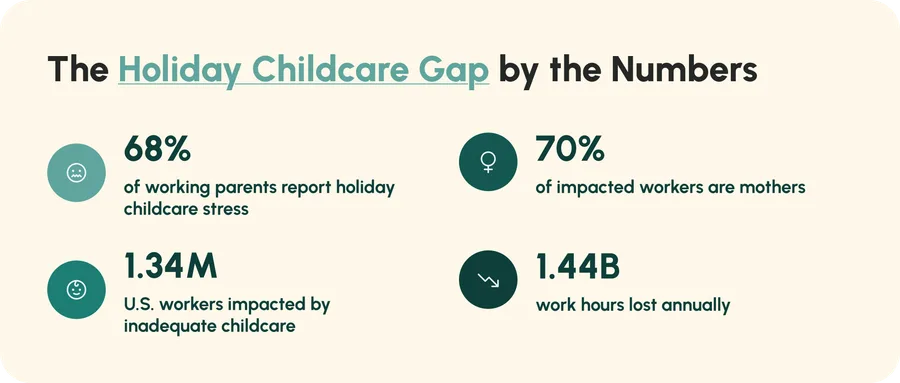
The problem is widespread: KPMG found that an average of 1.34 million workers in the U.S. were affected by inadequate childcare solutions last year. Mothers bear the brunt of the burden, representing 70% of impacted workers.
That’s not just a problem for employees, it’s also a recurring issue for their employers. These gaps often show up as last-minute absences and operational disruptions that increase overtime and strain already tight staffing plans. These unplanned absences led to $1.44 billion lost work hours last year, representing a huge amount of lost productivity. When working parents can’t find safe and effective solutions for managing childcare outside of school hours, everyone suffers.
Fortunately, some employers are developing innovative solutions to help their workers during childcare breaks, making it easier for them to maintain peak performance at home and on the job. By tracking absence rates and the reasons behind them over time, employers can better understand when childcare breakdowns are most likely to occur. Looking at this data holistically makes it easier to anticipate staffing risk during school breaks instead of reacting to them when call-offs surge.
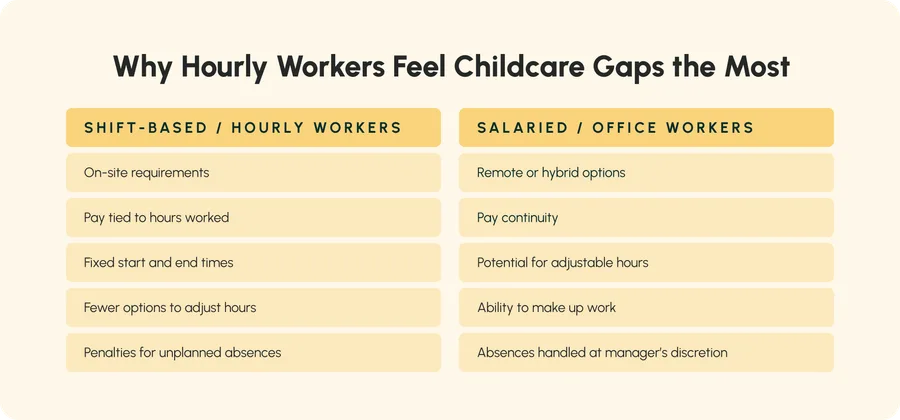
Here’s a look at some winning strategies for helping frontline employees strike a better work-life balance during school breaks and holidays.
Adopt micro-shift scheduling to support childcare gaps
In many cases, employees are able to get some coverage for their childcare needs, but it may not align to the same schedules as when school is in session. Flexible work arrangements that let employees set their own start and end times, while still meeting required hours, are increasingly gaining traction as a way to support working parents in hourly roles.
Splitting shifts into shorter “micro-shifts” lets parents arrange school-day pickups and drop-offs without needing to take a full day off. Many employers are now using micro-shift scheduling, or work periods of six hours or less, as a way to meet labor needs while respecting workers’ scheduling constraints.
Many shift-based employers today use internal “float pools,” of cross-trained or multi-skilled employees who can be assigned shift-by-shift as demand fluctuates to build flexibility into 24/7 operations. With this model, regularly scheduled staff have the option to adjust their start or end times, providing windows for childcare, while float-pool employees fill those vacated slots. Rather than overstaff across the board, employers forecast demand carefully, then draw on the float pool to cover micro-shift gaps. This approach maintains continuity in coverage, controls labor costs, and offers hourly or shift-based workers scheduling flexibility without jeopardizing operational needs.
Provide backup childcare programs during school breaks
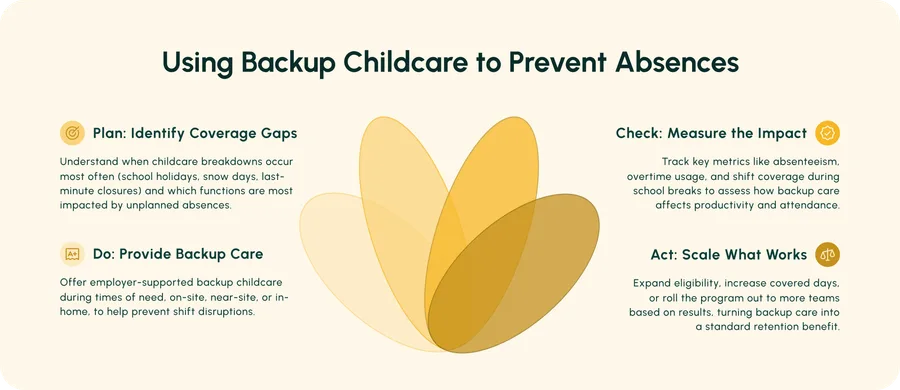
Rather than risk increased absences during school closures, some employers are stepping in with a backup childcare program that offers high-quality childcare at or near the workplace, or even in the employee’s home. The backup care program can provide care during holidays, summer break, and other situations when an employee’s normal childcare situation has fallen through.
In this model, the employer typically pays most of the cost and sets program rules (who is eligible, how many days per year, employee copay, age range, and whether adult/elder care is included). Best Buy, for example, offers U.S. employees up to 10 days of subsidized backup childcare per year through a partnership with Care.com.
Such arrangements are growing increasingly common, especially among larger employers: A Mercer survey found that 26 percent of organizations with between 500 and 5,000 employees offer backup care, while 37 percent of employers with over 5,000 employees do.
Offer childcare subsidies to offset care costs
Some employers don’t directly provide backup care, but they do offer subsidies that can go towards offsetting the extra costs of finding quality childcare during no-school periods. According to the same Mercer survey, 11 percent of smaller and 16 percent of larger organizations offer childcare subsidies.
How does it work? Employers typically provide their qualifying employees (working parents or guardians) with a recurring, non-taxable contribution that can be used to offset the cost of childcare facilities, afterschool activities, in-home care, and other types of childcare services. For instance, Mazda Toyota Manufacturing, a joint venture in Alabama, subsidizes 30 percent of the cost of their employees’ childcare expenses, up to $250 a month.
This direct cash assistance can be a lifeline to working parents – not only in supporting the high costs of childcare throughout the year, but in helping them avoid missing days when their normal childcare isn’t available. These stipends provide employees with the flexibility to choose childcare options that work for them at any given time, enabling them to cover the costs of after school care during the year and temporary care, such as a sitter or a camp, during school breaks and holidays.
The ROI of investing in employees
Businesses lose $3 billion annually due to employee absences caused by a lack of childcare. By making the effort to ensure that employees have suitable alternatives for childcare during school holidays, employers can reduce absenteeism, keep productivity high, and support their employees’ well-being as workers and as individuals.
Whether you’re in HR, a business leader, or an employee who wants better options for your team, building in flexibility and additional benefits to support your employees’ childcare needs is crucial for ensuring strong workplace performance and retention.
Give your team members the tools to support their lives, at work and at home, and you’ll see your workforce thrive.
